From Four Dollars to Sixty: Unpacking the Wild Price Swings Behind a Common Prescription

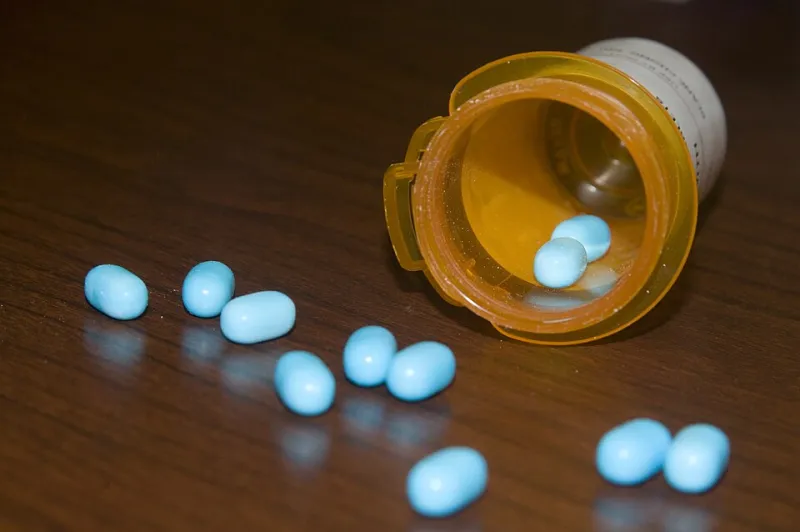
Photo by Photo by Cheung Yin on Unsplash on Unsplash
Amoxicillin has been off-patent for decades. It appears on the World Health Organization's list of essential medicines, it is prescribed tens of millions of times a year in the United States, and chemically speaking, one 500 mg capsule is identical to the next. So why can the same ten-day course ring up at $4 in one pharmacy and $60 in another — sometimes within the same zip code?
The answer has less to do with the drug itself and more to do with how American pharmacies set, hide, and negotiate prices. Understanding that machinery is the first step toward never overpaying for a routine antibiotic again.
Why the Same Prescription Has No Single Price
When a pharmacist fills your amoxicillin, the amount you pay depends on which of several parallel pricing systems applies to you:
- Insurance copays. Many plans place generic antibiotics in the lowest tier, often $5 to $10 per fill — but a copay can occasionally exceed the cash price, a quirk few patients think to check.
- Cash or "retail" price. This is the sticker price for uninsured patients, and it varies enormously. Pharmacies are not required to keep it low, and some mark up generics substantially to offset discounts elsewhere.
- Discount card rates. Third-party programs negotiate negotiated rates with chains and independents, frequently producing prices below both insurance copays and cash rates.
- Membership programs. Several national chains now offer flat-fee generic lists — the famous "$4 generic" programs — that bypass insurance entirely.
Because these systems run in parallel, the patient in line behind you may be paying three times what you pay for the identical capsules.
A Rough State-by-State Picture
Cash prices for a standard course of amoxicillin 500 mg (typically 20–30 capsules) trend differently across the country. Based on publicly reported pharmacy survey data, the general pattern looks like this:
- Lowest range ($4–$10): Large parts of the Midwest and South, where aggressive chain competition and flat-fee generic programs are widespread. States such as Ohio, Texas, and Florida frequently show floor prices at major chains.
- Middle range ($10–$25): Much of the Mountain West and Southeast outside major metros.
- Highest range ($30–$60+): Portions of the Northeast, Alaska, Hawaii, and certain urban independent pharmacies, where lower generic competition and higher operating costs push cash prices upward.
These are tendencies, not guarantees. A rural independent pharmacy in Maine may beat a Manhattan chain on any given day. The lesson is that geography shapes the odds, but the individual pharmacy — and the individual question you ask — matters more.
The Tools That Change the Math
Three resources reliably lower the price of generic amoxicillin for cash-paying patients:
1. Free discount cards and price-comparison apps. Services such as GoodRx, SingleCare, and WellRx publish real-time prices for specific drugs at specific pharmacies. Searching "amoxicillin 500 mg" with your zip code typically reveals a spread of several dollars to tens of dollars between nearby locations. Presenting the card or coupon at drop-off usually takes seconds.
2. Flat-fee generic programs. Walmart, Publix, and several others maintain lists of generics sold at fixed low prices — often around $4 for a standard course — without insurance. Publix has historically offered certain antibiotics at no charge. Ask whether amoxicillin is on the store's current list.
3. Community health centers and 340B pharmacies. Federally Qualified Health Centers purchase medications under the 340B program at steep discounts and frequently pass those savings to patients regardless of insurance status. If cost is a barrier, a local FQHC is often the cheapest legitimate route to a filled prescription.
What to Say at the Counter
Pharmacists respond to direct questions. A few scripts that work:
- "What's the lowest price for this without insurance, including any discount program you accept?"
- "Is amoxicillin on your store's generic savings list?"
- "Does my insurance copay end up costing more than your cash price? Please run it both ways."
- "Can you match the price I found on [comparison app] for this pharmacy?"
That last question matters more than most patients realize. Many pharmacies will honor a competitor's or app's advertised price simply because asking is rare and the margin on generics still allows room to move.
A Note on Safety While Shopping on Price
Bargain-hunting should never mean bypassing safeguards. A legitimate low price still requires a valid prescription from a licensed prescriber and dispensing by a state-licensed pharmacy. Be skeptical of any online seller offering amoxicillin without a prescription or at prices that seem impossibly low — counterfeit antibiotics are a documented problem, and an ineffective fake is worse than an expensive genuine article. Our guide to spotting illegitimate online pharmacies covers the warning signs in detail.
The Bottom Line
Amoxicillin is one of the cheapest, best-studied antibiotics in the world, and in most American communities a full course can be obtained for the price of a sandwich — if you know which questions to ask. Compare prices before you fill, ask the pharmacist to run the numbers both with and without insurance, and remember that the first price quoted is rarely the lowest one available.