The Ten-Day Turnover: Inside Your Gut When Amoxicillin Moves In
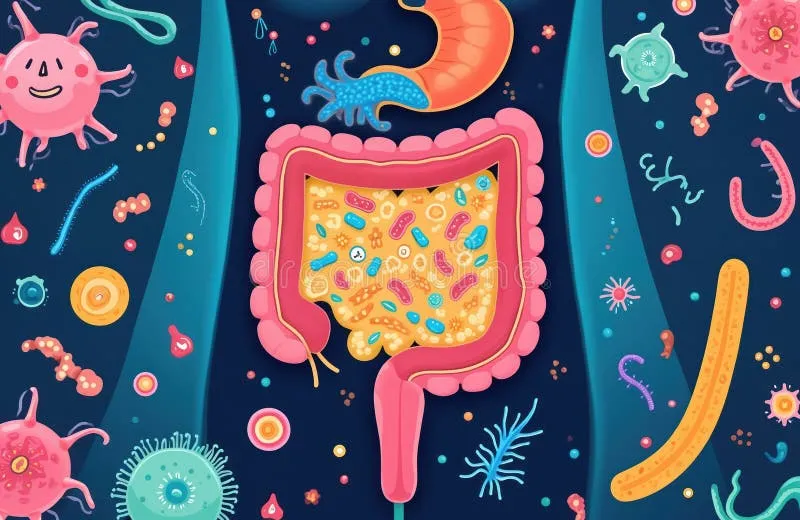
Photo: healthy gut microbiome bacteria illustration digestive system, via thumbs.dreamstime.com
Most patients filling an amoxicillin prescription at their local CVS or Walgreens think of it as a precision tool: ten days of capsules, an infection cleared, case closed. The reality is broader. Amoxicillin travels through your entire digestive system, and along the way it affects bacteria that had nothing to do with your strep throat, ear infection, or sinusitis.
Understanding this side of the story doesn't mean avoiding antibiotics when you need them. It means knowing what to expect and how to help your gut recover.
What Actually Happens During the Course
Your intestines host an estimated 38 trillion microorganisms — a community that helps digest fiber, produces certain vitamins, and trains your immune system. Amoxicillin works by interfering with bacterial cell wall construction. That mechanism doesn't distinguish between the Streptococcus causing your infection and harmless (or helpful) bacteria living in your colon.
Research using genetic sequencing to map gut bacteria before and after antibiotic courses has found that even a short course can reduce microbial diversity, sometimes noticeably within days. Some species rebound within weeks. Others may take months to return to their prior levels, and a few individuals never fully recover their original balance.
The good news: amoxicillin is considered a relatively narrow-spectrum penicillin compared with broader drugs like clindamycin or certain fluoroquinolones, which are associated with more disruptive and longer-lasting microbiome changes. Still, "less disruptive" is not "no disruption."
The Symptoms You Can Feel
The most common complaints during a course of amoxicillin are loose stools, mild cramping, bloating, and nausea. These are direct consequences of the drug altering your intestinal ecosystem — when beneficial bacteria thin out, digestion and water absorption can shift.
There is also a more serious concern worth knowing about: Clostridioides difficile (C. diff) infection. When antibiotics suppress the normal gut community, this opportunistic bacterium can multiply and release toxins, causing severe, watery diarrhea, fever, and abdominal pain. It's uncommon with amoxicillin compared with broader-spectrum agents, but any diarrhea that becomes severe, bloody, or persistent during or weeks after treatment warrants a call to your doctor. Never try to tough it out on your own.
Probiotics: What the Evidence Supports
Walk down any supplement aisle in an American grocery store and you'll find dozens of probiotic products promising to "protect your gut" during antibiotics. The claims outpace the data, but that doesn't mean everything on the shelf is hype.
Reasonably supported:
- Specific multi-strain combinations containing Lactobacillus rhamnosus GG and Saccharomyces boulardii have the strongest track record in clinical studies for reducing antibiotic-associated diarrhea. S. boulardii is a yeast, so it isn't affected by the antibiotic itself.
- Timing matters. Taking the probiotic a few hours apart from your amoxicillin dose — rather than swallowing them together — is the practical approach most clinicians suggest.
Weak or unsupported:
- Vague "gut health" blends with proprietary formulas and no published trials.
- Kombucha, probiotic sodas, and trendy shots — pleasant, perhaps, but unreliable in strain content and dose.
- The idea that one probiotic "restores" your microbiome. No commercial product has been shown to reseed a disrupted gut community fully.
A note for immunocompromised patients and those with central lines or critical illness: probiotics carry rare but real infection risks. Check with your physician before starting any supplement.
Practical Steps During and After Treatment
- Take amoxicillin exactly as prescribed. Completing the full course as directed reduces the risk of treatment failure and resistance. Don't stop early because your symptoms improved.
- Eat fermentable, fiber-rich foods. Beans, oats, asparagus, bananas, onions, and garlic feed beneficial bacteria and may support their regrowth once the course ends.
- Add fermented foods if you tolerate them. Plain yogurt with live cultures, kefir, sauerkraut, and kimchi provide live microbes along with nutrients — a food-first option many dietitians favor.
- Hydrate, especially if stools loosen. Fluids and electrolytes matter more than any supplement during a rough course.
- Don't panic over temporary changes. For most healthy people, diversity begins recovering within weeks of the final dose.
- Call your doctor for red flags. Severe or bloody diarrhea, high fever, or significant dehydration requires prompt medical attention — not a stronger probiotic.
The Bottom Line
A ten-day course of amoxicillin is a trade-off: targeted relief from a genuine bacterial infection in exchange for temporary upheaval in your digestive ecosystem. For most patients, that trade is clearly worth it, and the gut largely recovers on its own. Sensible eating, evidence-backed probiotic strains when appropriate, and vigilance for warning signs cover nearly everything within your control. What isn't within your control — and shouldn't be — is skipping doses or cutting the course short to spare your microbiome. Talk to your pharmacist or physician about any persistent digestive symptoms rather than adjusting the plan yourself.