The Lifelong Label: Why 9 in 10 'Penicillin Allergies' Deserve a Second Look
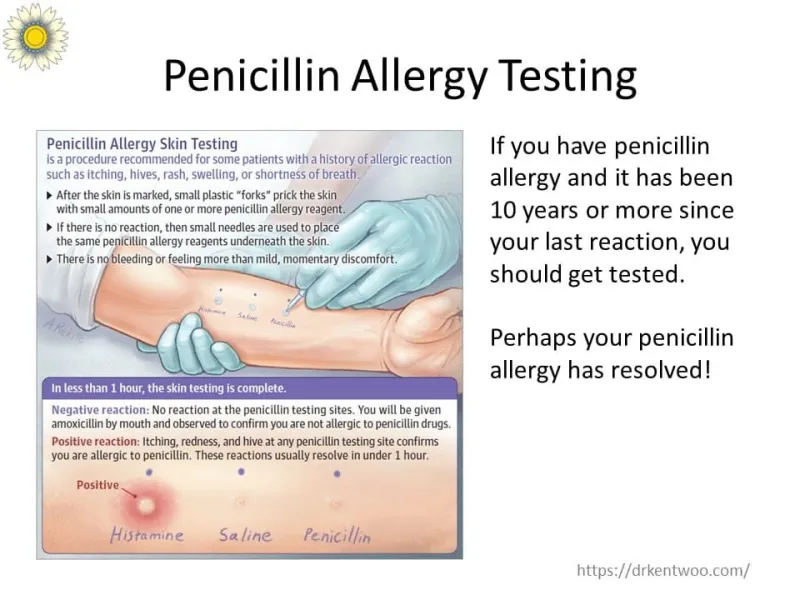
Photo: allergist skin test penicillin allergy testing medical office, via drkentwoo.com
Roughly 10 percent of patients in the United States carry a penicillin allergy notation in their medical record. According to allergy specialists, fewer than 1 in 10 of those individuals would experience a genuine reaction if given the drug today. That gap carries real consequences: patients with a penicillin allergy label face longer hospital stays, higher rates of resistant infections, and more frequent use of broader, costlier antibiotics.
How a Childhood Rash Becomes a Permanent Record
Most penicillin allergy labels originate in childhood. A toddler develops an ear infection, receives amoxicillin, and breaks out in a blotchy rash a few days later. A worried parent calls the pediatrician, the word "allergy" enters the chart, and it stays there — through college physicals, pre-surgical screenings, and decades of pharmacy intake forms.
The trouble is that many of these rashes are not allergic at all. Viral infections themselves can trigger skin eruptions, and certain viruses (particularly Epstein-Barr) cause rashes in patients taking amoxicillin that have nothing to do with drug sensitivity. True allergic reactions also tend to fade over time: an estimated 80 percent of people with genuine penicillin IgE-mediated allergy lose that sensitivity within ten years.
Why the Label Is Riskier Than the Drug
An inaccurate allergy designation is not a harmless footnote. When clinicians avoid first-line penicillins, they often reach for alternatives such as fluoroquinolones or clindamycin — medications associated with higher rates of C. difficile infection, antibiotic resistance, and adverse effects. Studies have shown that patients with a documented penicillin allergy have longer hospitalizations and greater exposure to broad-spectrum agents.
There is also a cost dimension. Amoxicillin remains among the least expensive antibiotics available in the US; substitutes frequently cost several times more.
A Symptom Checklist: True Allergy or Benign Side Effect?
Not every reaction deserves the allergy label. Review your own history and consider which of these describes your experience:
Signs suggesting a genuine allergic reaction:
- Hives that appeared rapidly and spread
- Swelling of the lips, tongue, face, or throat
- Difficulty breathing or wheezing
- Anaphylaxis requiring emergency treatment
- A blistering, peeling, or widespread rash (possible SJS or DRESS)
Signs more consistent with a side effect or unrelated event:
- Mild stomach upset, nausea, or diarrhea
- A faint, non-itchy rash appearing several days into treatment during a viral illness
- A headache or a yeast infection following the course
- A reaction reported by a parent decades ago with few details recorded
If your history falls into the second group, the label may warrant reevaluation. If it falls into the first, do not attempt re-exposure on your own — consult a specialist.
The Path to Verification: Testing and Delabeling
The definitive evaluation is penicillin skin testing, performed by a board-certified allergist. The process involves pricking the skin with diluted penicillin components and observing for a reaction, typically followed by a supervised oral challenge with amoxicillin when the skin test is negative. The entire process is often completed in a single visit.
Major US health systems — including Kaiser Permanente and the Vanderbilt University Medical Center — have run formal antibiotic allergy delabeling programs with strong results, and the CDC's antibiotic stewardship initiative encourages primary care physicians to address inaccurate allergy records during routine visits.
Practical Steps for Patients
- Request a copy of your record and note exactly what the allergy entry says.
- Document the original reaction as thoroughly as family memory allows.
- Ask your primary care provider whether a referral to an allergist is appropriate.
- If testing rules out allergy, ensure the label is removed from your chart and pharmacy profile.
For the millions of Americans whose "penicillin allergy" amounts to a long-faded childhood rash, a single appointment can restore access to the safest, most effective, and most affordable antibiotic available. That is worth an afternoon in an allergist's office.